
Scaling with Purpose: Savneet Singh on Culture, AI, and Growth
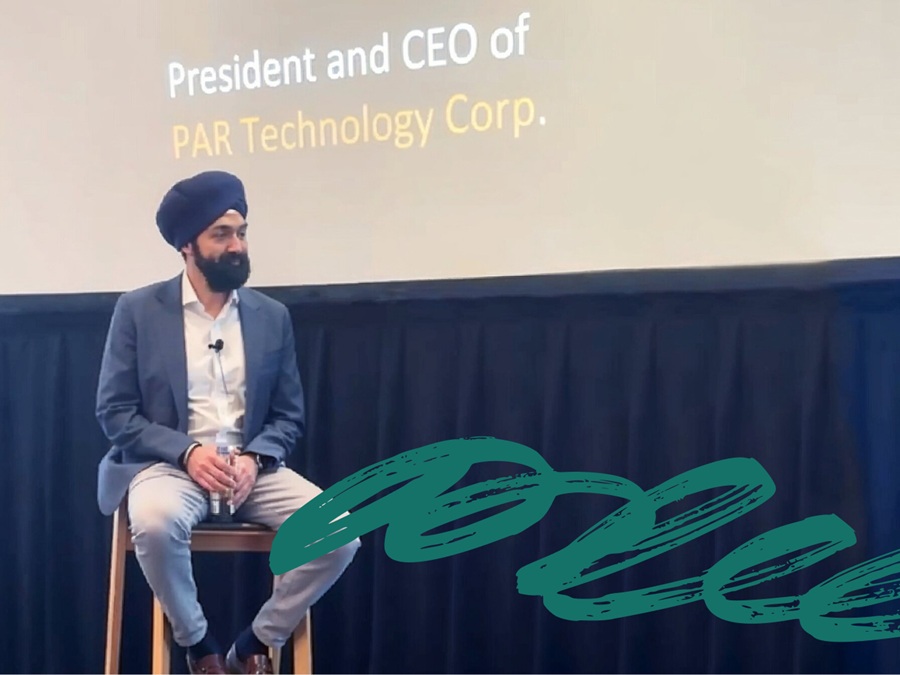
At the Exa Leadership Conference 2025 held in Dallas, Savneet Singh, President and CEO of PAR Technology, shared actionable insights on transforming a legacy hardware company into a modern SaaS business. In a candid fireside chat with Omer Sajid, Exa’s founder & CEO, he discussed navigating technical debt, fostering a product-led culture, and leveraging AI to drive growth.
Below is the full Q&A, offering practical lessons for leaders steering their organizations through change, scaling with purpose, and building resilient teams.
Questions and Answers with Savneet Singh
Omer:
Can you share a bit about PAR Technology’s story – what it looked like before you joined and how it has evolved since?
Savneet:
PAR’s story is a great American entrepreneurial ride, and I’m proud to be part of it. Back in 1968, our founders, fresh from the Air Force and educated via the GI Bill, started PAR as a defense contractor, chasing pattern analysis recognition – like an early Palantir.
Fast forward to 1978, when one founder’s Italian immigrant mother, working at a McDonald’s, said, “Americans can’t do math!” That sparked the invention of the point-of-sale system, patented and adopted by McDonald’s in 1980, leading to our 1982 public listing.
The ‘80s were a high, but we stumbled for 25 years, nearly going bankrupt by missing the software revolution and leaning too hard on McDonald’s. We became a hardware-services outfit, losing ground to Oracle and others.
In 2014, we acquired a small point-of-sale software product for enterprise restaurants, growing from 300 to 5,000 stores by 2018. When I joined the board in 2018, it was chaos – our CFO was jailed for theft, we faced SEC/DOJ investigations, and activist shareholders wanted to sell. As CEO, I took software revenue from under $10 million to $300 million by 2025, half organic, half through acquisitions, proving we could rebuild with focus and heart.
Omer:
And what about the hardware side of the business – has that revenue been growing as well?
Savneet:
Hardware’s been kept static, not growing, and that’s by design. I’ve always believed every part of the business needs to stand on its own.
- We keep hardware revenue static, ensuring it breaks even or makes money.
- One-time hardware revenue is real cash – we reinvest it or pay dividends, but no segment gets to lose money unless justified by long-term SaaS commitments.
- It’s about discipline: no bleeding cash, just building a foundation for sustainable growth.
Omer:
Leaders often wrestle with whether to put product or culture first. For you, which came first at PAR, and why?
Savneet:
Every business problem is a people problem – product and culture are one and the same. When I joined PAR, our product was a mess, but fixing it meant rallying people. I slashed budgets in marketing, HR, finance, and legal to pour every dollar into product, telling everyone, “This is our North Star.” We built a “day one” mentality, recruiting a team that believed in the mission.
For M&A, we aligned every acquisition with product goals, creating three plans upfront: a realistic financial plan, an organizational design, and a culture plan to avoid clashes. It’s about getting the right people around the right table to solve the right problem – that’s how you win.
Omer:
As PAR grows through M&A, there’s naturally consolidation – of people, of products, of teams. How do you go about identifying and assessing the talent during that process?
Savneet:
Acquiring a company is like asking people to switch their church—it’s a big leap of faith. You’ve got to handle it with care and clarity.
- We do deep upfront work: I meet the HR lead and ask, “What KPIs matter? Did you cut benefit costs?” For sales, I look at metrics.
- Early on, I trust the acquired CEO’s judgment on team placement, but we verify with 30-, 60-, and 90-day surveys.
- My internal team’s feedback tells me who’s performing and who fits.
- Before closing a deal, we create three plans: a financial plan we both sign off on, an organizational design to clarify reporting, and a culture plan – down to logo transitions, Slack emojis, and town hall cadences.
- It’s about winning the team over, making them believe in our shared mission.
Omer:
How did leaning on software permeate?
Savneet:
I’m a Warren Buffett fan, and discovering Constellation Software in college lit a fire in me. Software’s the best business model – long-term contracts, stickiness, and upsell potential. I learned in a prior financial software gig that if you can raise prices without losing customers, you’ve got something special.
At PAR, every acquisition makes our platform stickier, increasing customer lifetime value. Workflow products in core markets let us keep selling more, boosting retention and valuation. It’s why I told you years ago, “This is how you build a business that lasts.”
Omer:
When you joined PAR, Brink was the software that was also a legacy product. How did you manage growth on that product while dealing with technical debt?
Savneet:
Brink was a legacy product – growing fast but built wrong with 45 versions, a technical debt nightmare. We went all in, and it wasn’t pretty.
- We put 80% of R&D into fixing technical debt, a bold move for a public company. Wall Street wasn’t thrilled, but it was the right call.
- We cut the sales pipeline, slowing growth from 100% to 30-40% to focus on sustainability.
- It took two years to see progress and three and a half to consolidate into one configurable, extensible version.
- I rallied everyone – finance, legal, everyone – to understand the goal. We proved we could solve it ourselves, despite consultants saying it’d cost millions.
- It showed me any problem is surmountable with clear goals and the right team.
Omer:
How do you see AI disrupting software businesses?
Savneet:
AI impacts businesses in two ways: internal tooling and product enhancement.
• Internal Tooling: AI tools like chatbots and Gong integrations are essential for efficiency, similar to adopting CRM systems, to handle customer success, support, and HR more effectively.
• Product Enhancement: AI improves user experience, e.g., in PAR’s loyalty software, enabling quick campaign creation for lapsed customers.
AI enhances product interconnectivity, e.g., inventory software alerting about expiring items and triggering marketing campaigns or labor adjustments. Focus on making customers see you as their AI ally to prevent disruption by startups.
Omer:
You pointed out a disconnect between management and sales. What other critical disconnects did you notice in the organization, and which ones, once corrected, really changed the company’s trajectory?
Savneet:
Silos kill progress, and I saw it firsthand.
Here’s what we tackled:
- Product and Sales: Product managers were often promoted developers, not mini-CEOs. We trained them to think like owners, aligning with sales to ensure products sell.
- Product and Engineering: Engineers had market insights that weren’t reaching up. We pushed product managers to share and incorporate their feedback, especially with offshore teams.
- CEO Isolation: I was guilty of holding customer insights in my head. Now, I share everything to keep the team informed and aligned.
Omer:
In your opinion, what are good qualities of a product manager?
Savneet:
A great product manager is a partner, not a dictator, and thinks like an owner.
- Empathy for Engineers: They must earn engineers’ trust, understanding their journey. Some engineering knowledge helps, but it’s not mandatory.
- Ownership Mindset: They’re involved in pricing, market fit, not just pushing product out the door.
- Customer and Sales Engagement: They validate ideas with sales and customers to ensure monetizability.
- Clear KPIs: Success is measured by customer adoption and revenue, not just delivery dates.
- Self-Reflection: They can explain why past products succeeded or failed, showing market and business acumen.
Omer:
You mentioned talking to your core customers earlier. How do you make sure those insights actually get shared across the organization?
Savneet:
I’m obsessive about not letting insights sit in my head – they’re useless there.
- I hold bi-weekly town halls to share customer feedback with everyone.
- After customer meetings, I Slack or email insights immediately, like, “This chain wants off x86 – where’s our Android solution?”
- Sales gets tons of intel, so we push them to share not just feature requests but market context and motivations with product and engineering teams.
- Processes ensure nothing gets siloed, keeping the whole team in the loop.
Omer:
Customer concentration is always top of mind. How do you think about managing that risk, and what steps are you taking to address it?
Savneet:
Customer concentration is a trap, and I’ve lived it.
- The only way out is growth – build a bigger, better business to reduce reliance on any one customer.
- Deliver on promises. Customers have long memories if you fall short of what you sold them.
- We do multi-hour quarterly business reviews (QBRs) with major customers, diving into data and feedback from beyond just the buyer.
- AI note-takers and product telemetry help us spot issues early, like unused modules, so we can act fast.
- Mitigates customer concentration by growing the overall business, reducing reliance on any single customer.
Omer:
From the perspective of a mature company, what does the balance look like between innovation efforts and meeting current customer needs?
Savneet:
I bristle at “mature” – we’re still hungry, still growing. In B2B software, you win by serving customers’ real needs, not chasing shiny ideas.
- Our roadmap is heavily customer-driven, solving problems that impact all customers, not just the loudest ones.
- A smaller slice of our budget goes to innovation like AI, introduced gradually to align with customer priorities.
- Customers can’t always articulate future needs – think Henry Ford’s “faster horses” – so we balance their demands with careful bets on the future.
Omer:
What guidance would you offer to leaders across our portfolio companies – both emerging leaders and executive teams – as they face today’s disruptive and rapidly changing environment?
Savneet:
Leading through change is tough, but it’s about staying true to yourself while adapting.
Here’s what I’ve learned:
- Don’t change who you are – what made you successful still will. Just update your tools and embrace change without fear.
- Kill bureaucracy. I set up roadblock@partech.com for employees to call out inefficiencies – like outdated drug tests slowing hiring. It gives teams agency.
- Culture is everything. We were broken, but culture saved us. We set polarizing values – speed, ownership, winning together – to attract the right talent.
- Make culture real: I paid employees for cost-saving ideas, saving $5 million. I offered $1,000 to cancel useless meetings, raising the bar for new ones. I ditched formal emails and suits to focus on substance.
- Lean on advisors like Omer. His objective insights, alongside my board’s, keep me grounded.
Scaling with Purpose in a Changing World
As AI, consolidation, and shifting customer demands reshape industries, Savneet’s insights offer a blueprint for scaling with both ambition and responsibility. The real measure of leadership, as his story shows, lies in building teams and cultures that can thrive no matter how the market changes.
Conversations like this capture the essence of what the Exa Leadership Conference 2025 is all about: candid insights, practical lessons, and a focus on purposeful leadership in an era of rapid change.